

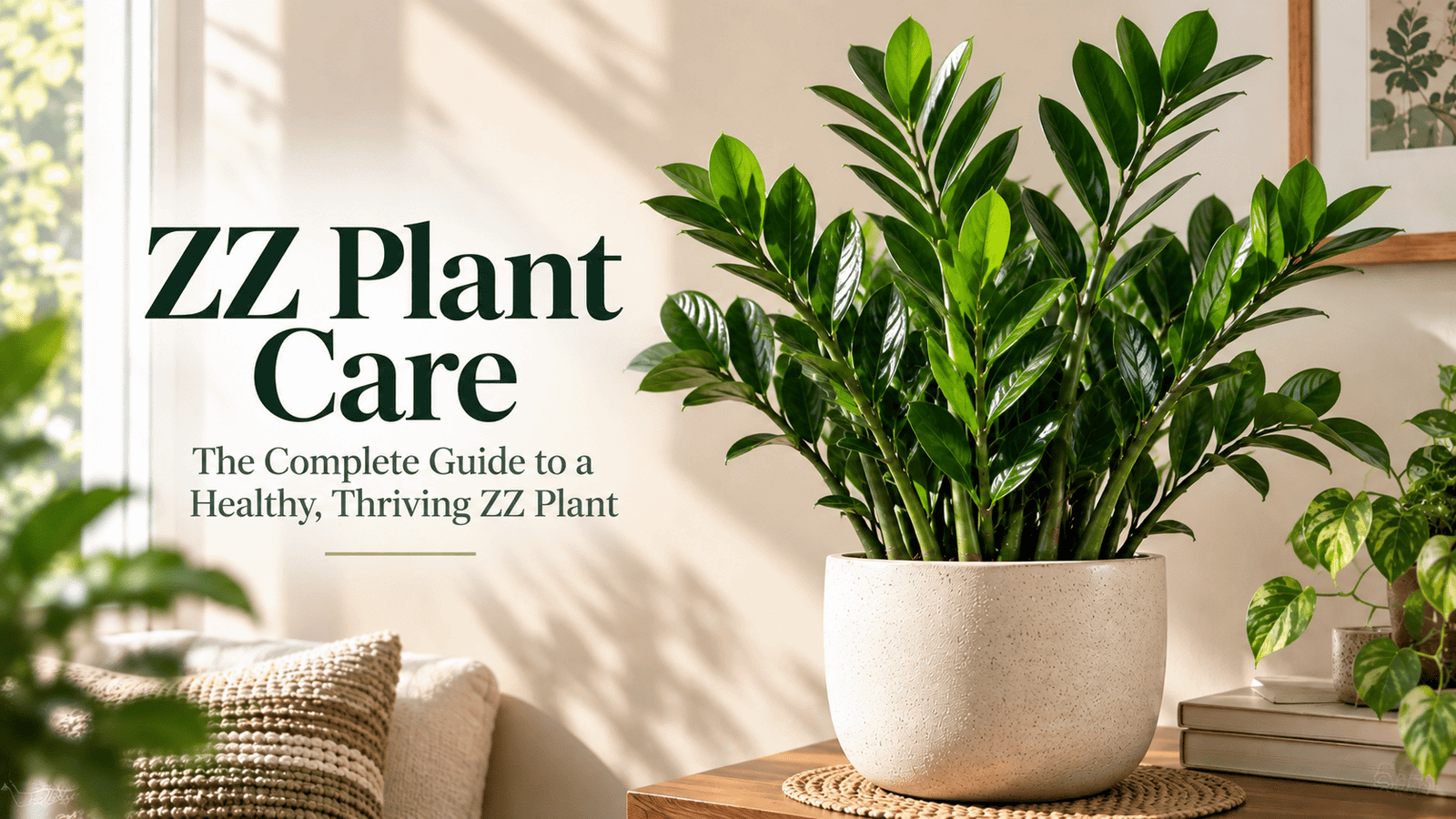

The ZZ plant (Zamioculcas zamiifolia) has a reputation for surviving almost anything, and most of that reputation is deserved. It stores water in thick underground rhizomes, shrugs off low light, and forgives the occasional missed watering. But “hard to kill” is not the same as “impossible to kill” — nearly every struggling ZZ plant traces back to one of two habits: too much water, or too little light for the growth you were expecting. Get those two right and the rest of the care is mostly leaving it alone.
Here is what actually matters for keeping one healthy indoors.
ZZ Plant Care at a Glance
| Care factor | What it needs |
|---|---|
| ☀️Light | Bright, indirect light for steady growth; tolerates low light but grows slowly. No direct sun. |
| 💧Water | Only when the mix has dried through — roughly every 2–3 weeks, less in winter. |
| 🧶Soil | Loose, fast-draining mix in a pot with a drainage hole. |
| 🌡️Temperature | Comfortable room temps, about 65–75°F; keep it above ~50°F. |
| 🌫️Humidity | Average household humidity is fine — no misting needed. |
| 🌱Feeding | A light dose of balanced fertilizer once or twice in spring and summer. |
| ⚠️Safety | Toxic to pets and people if chewed or eaten; keep out of reach. |
Watering: The One Thing You Can Actually Get Wrong
Overwatering is the single most common way a ZZ plant dies. The rhizomes under the soil are water-storage organs, which is why the plant handles drought so well — and why sitting in wet soil rots it from below before you notice any trouble up top.
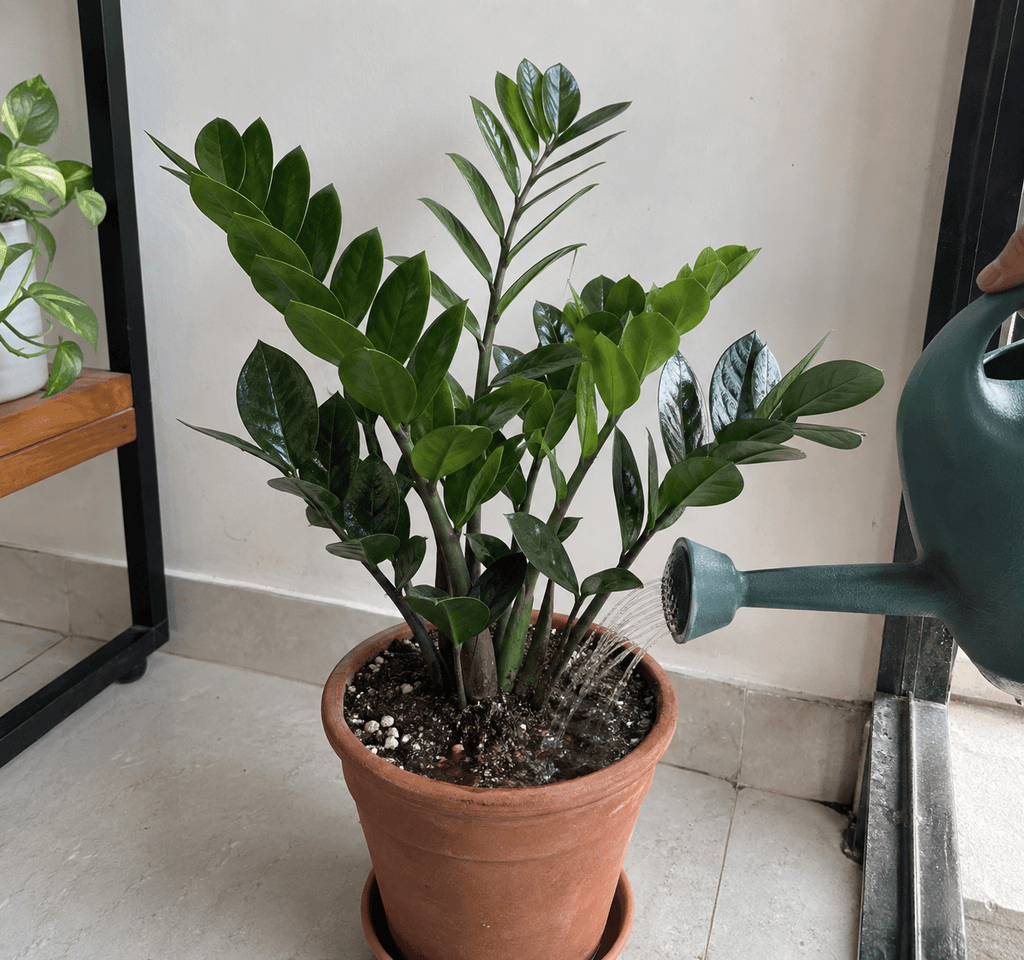
Forget a fixed schedule. Water only when the mix has dried out almost completely. Two reliable checks:
- Push a finger two to three inches into the soil. If it still feels damp, wait.
- Lift the pot. A bone-dry pot is noticeably lighter than a freshly watered one — after a few weeks you can judge it by weight alone.
When it is time, water thoroughly until it runs out the drainage holes, then empty the saucer so the roots never stand in water. In a bright, warm spot that usually lands around every two to three weeks; in a dim or cool room it can stretch to four to six, and even less during winter. When in doubt, wait — a thirsty ZZ recovers in a day, while a rotted one often does not.
Light: A Growth Decision, Not a Survival One
The ZZ plant’s famous low-light tolerance is real but often misread. It will survive in a dim corner. It will grow — pushing out new stems and staying full — in bright, indirect light. So the real question is not “will it live here?” but “how much new growth do I want?”
Bright, indirect light near an east- or north-facing window, or a few feet back from a brighter one, is the sweet spot. Direct sun is the one thing to avoid: harsh midday light scorches the glossy leaves and leaves pale or brown patches. If your only option is a genuinely dark room with no usable natural light, a basic grow light keeps the plant healthier and stops the stems from stretching and flopping toward the nearest window.
Soil and Potting
ZZ plants are not fussy about soil type, but they are unforgiving about drainage. Any standard houseplant or potting mix works as long as water moves through it quickly instead of staying soggy. To loosen a dense mix, stir in a couple of handfuls of perlite, or use a cactus and succulent mix, which drains fast by design.
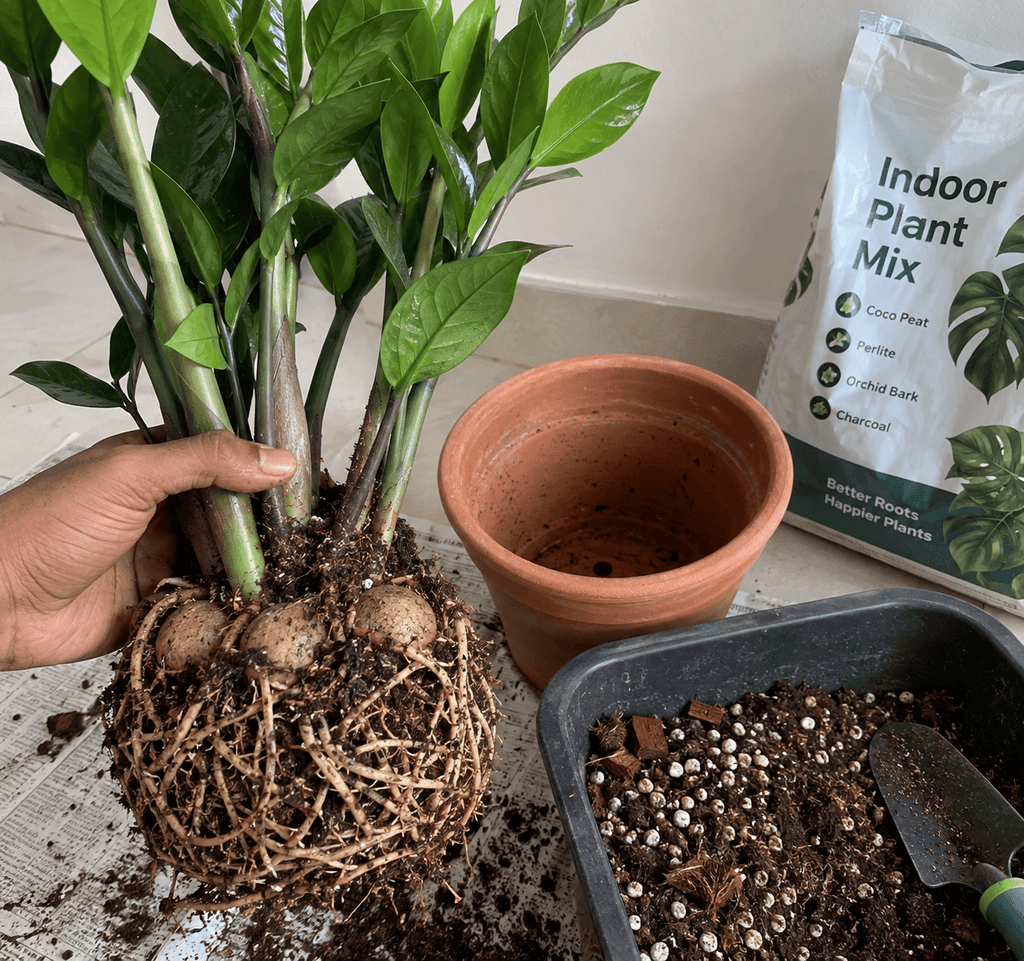
The pot matters as much as the mix. Whatever you pick, it needs a drainage hole — decorative pots without one trap water at the bottom and quietly rot the rhizomes. Terracotta is a good default because its porous walls pull moisture out of the soil, adding a margin of safety against overwatering.
Repot only when the plant is genuinely crowded — roots circling the surface, or a pot bulging or cracking from the pressure of the rhizomes. ZZ plants are slow growers and are content slightly snug, so this is usually a once-every-two-or-three-years job. Move up just one pot size when you do.
Temperature, Humidity, and Feeding
These rarely cause trouble, which is why one short section covers all three. ZZ plants are comfortable in the same range most homes sit at — roughly 65 to 75°F — and dislike cold. Keep them away from drafty winter windows and from heating or cooling vents, and do not let them drop below about 50°F.
Humidity is a non-issue: average household air is fine and there is no need to mist. Feeding is minimal too. A slow grower does not need much — a diluted balanced houseplant fertilizer once or twice across spring and summer is plenty. Skip feeding in fall and winter, when growth naturally stalls.
Common Problems and How to Read Them
Almost every ZZ plant problem is a watering or light signal. The skill is reading which one.
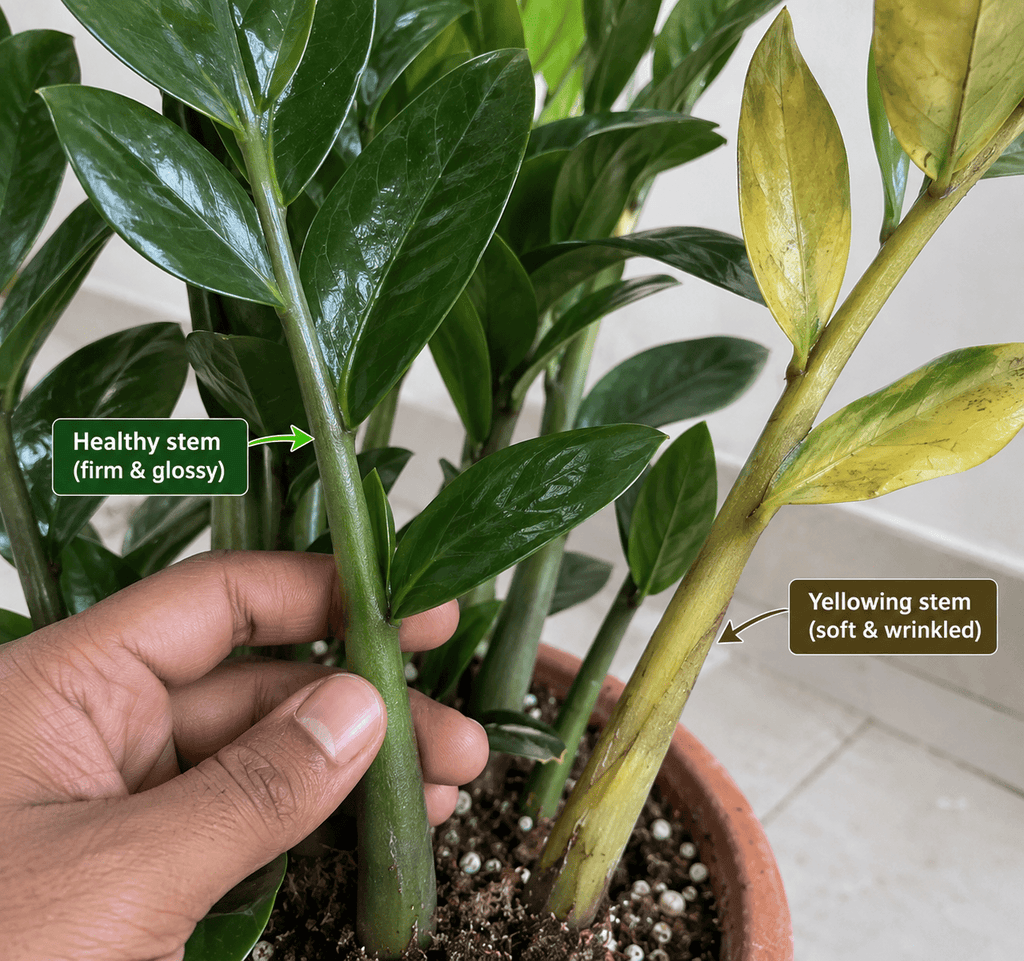
Yellowing leaves. The classic overwatering sign. If lower leaves yellow and the stems feel soft or mushy, the soil has been staying too wet. Let it dry out fully, confirm the pot actually drains, and in a bad case slide the plant out to check the rhizomes for soft, brown rot.
Wrinkled or drooping stems. The opposite problem — this is thirst. Wrinkling leaves and stems that lean or flop usually mean the plant has finally used up its stored water. A thorough watering typically firms it back up within a day or two.
Brown, scorched patches. Too much direct sun. Move the plant out of the direct beam and into bright, indirect light.
Very slow or no new growth. Often not a problem at all — ZZ plants are naturally slow, and slower still in low light. If you want more growth, give it brighter indirect light and a little feeding in the growing season rather than more water.
Pests. Uncommon on ZZ plants, but mealybugs (white cottony spots) or spider mites can show up, usually in dry indoor air. Wipe the leaves with a damp cloth and treat with insecticidal soap or neem oil if they persist.
Frequently Asked Questions
How often should I water a ZZ plant?
Only when the soil has dried out almost completely — usually every two to three weeks in bright, warm conditions, and less often in low light or winter. Check the soil rather than following a set calendar.
Can a ZZ plant survive in low light?
Yes. It tolerates low light better than almost any houseplant, but it grows very slowly there. For fuller, steadier growth, give it bright, indirect light.
Why are my ZZ plant’s leaves turning yellow?
Overwatering is the usual cause. Let the soil dry fully, make sure the pot drains, and check the rhizomes for rot if the stems feel soft.
Are ZZ plants toxic to cats and dogs?
Yes. Like other aroids, ZZ plants are toxic if chewed or eaten and the sap can irritate skin, so keep them out of reach of pets and small children.
How fast do ZZ plants grow?
Slowly. Even in good conditions they add only a few new stems a year, so slow growth is normal, not a sign of poor health.
