

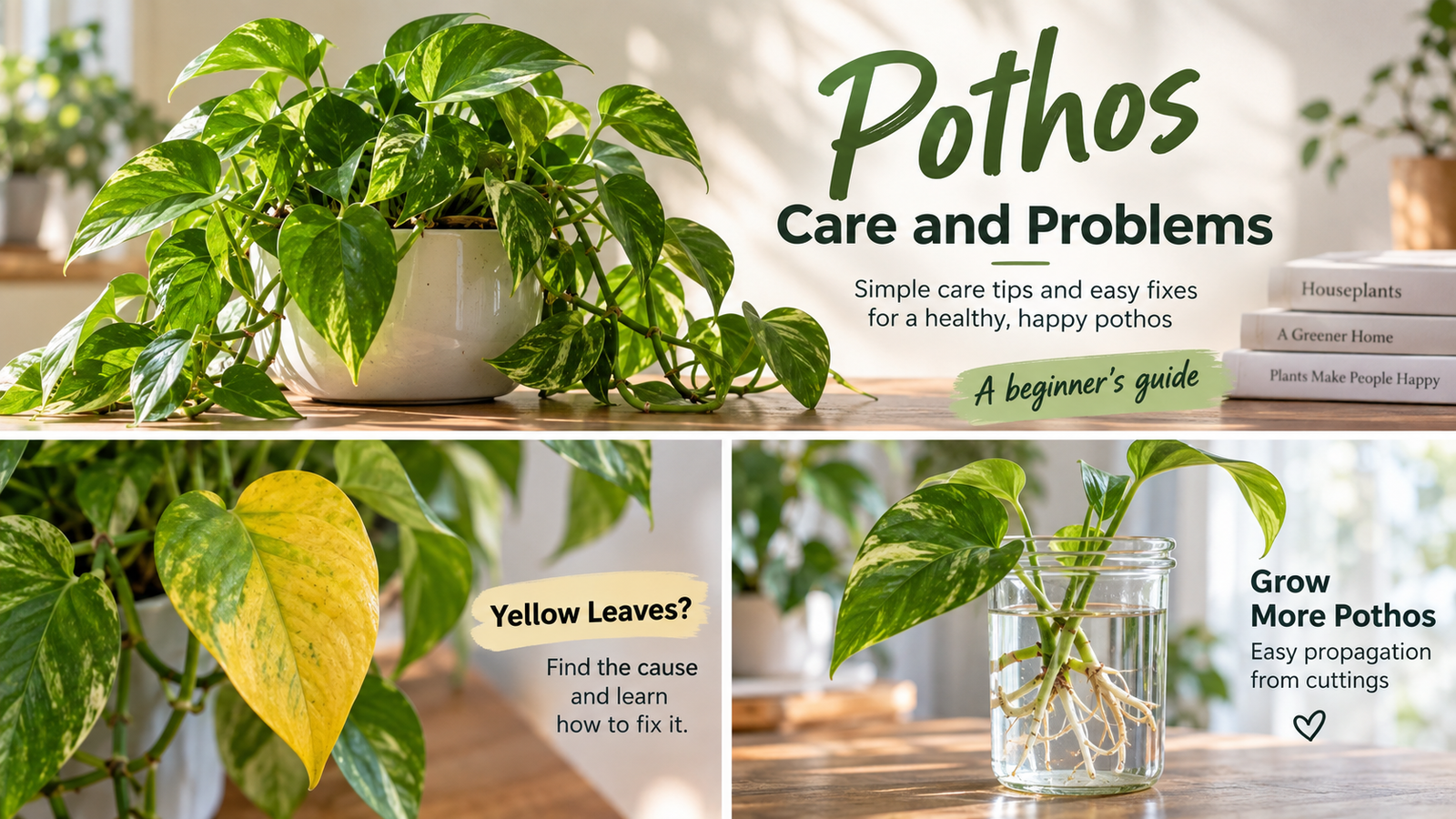

Pothos is one of the easiest houseplants to grow indoors, but it can still develop yellow leaves, brown tips, drooping stems, or slow growth. In most cases, the problem comes down to light, watering, drainage, or another basic care issue.
This guide covers pothos care and problems in simple terms, so you can identify what is wrong and know what to do next.
Basic Pothos Care
Getting the basics right can prevent many common problems.
Light
Pothos grows best in bright, indirect light. A spot near a bright window is usually a good choice, as long as the plant is protected from strong direct sunlight for long periods.
Too little light can lead to slow, stretched growth and less variegation on variegated varieties. Too much direct sun can cause scorched or faded leaves.
If your pothos is in a very dark corner, move it closer to a bright window and see how it responds.
Pothos isn’t the only beginner-friendly houseplant that does well indoors. If you’re also growing a snake plant, see our Snake Plant Care and Problems guide for help with its light, watering, and common problems.
Watering
Don’t water pothos on a fixed schedule. Check the soil first.
If the top part of the soil feels dry, it is usually time to water. When watering, soak the soil thoroughly and let the excess water drain through the bottom of the pot.
Avoid leaving the roots sitting in water. Soil that stays wet for too long can cause root problems.
A pot with a drainage hole makes this much easier.
Soil and Drainage
Pothos does not need complicated soil. A good-quality indoor potting mix can work well as long as it drains reasonably well.
The pot is just as important. Choose one with a drainage hole so excess water has somewhere to go. If water remains in the soil for many days after watering, check the drainage before changing your watering routine.
Temperature
Normal indoor temperatures are generally suitable for pothos.
Keep the plant away from freezing temperatures, cold drafts, and direct blasts from heating or cooling vents. Sudden temperature changes can also stress the plant.
Fertilizer
Pothos does not need frequent feeding.
During active growth, you can use a balanced houseplant fertilizer according to the product label. Avoid using more than recommended. Too much fertilizer can damage the roots.
If your pothos is struggling because of poor light or watering, adding more fertilizer will not solve the underlying problem.
Pruning
Pruning is useful when pothos becomes too long, sparse, or difficult to manage.
Use clean scissors to cut back unwanted vines. You can also remove yellow or badly damaged leaves. Healthy cuttings can be used for propagation if you want to grow more pothos or make the original plant look fuller.
Common Pothos Care Problems
Most problems become easier to solve when you look at the plant and the soil together.
Yellow Leaves
Likely cause: Overwatering is a common cause, especially when the soil stays wet for too long.
An occasional yellow older leaf can also happen naturally.
Fix: Check the soil before watering again. If it is consistently wet, allow it to dry appropriately and check that the pot drains properly.
If several leaves are turning yellow at once, pay particular attention to the watering and drainage.
Brown Leaf Tips or Edges
Likely causes: Dry soil, strong direct sunlight, very dry conditions, or fertilizer buildup can all contribute to brown areas.
Fix: Check the soil first. If it is very dry, water thoroughly.
Also check whether the plant is receiving strong direct sunlight. If so, move it to a spot with bright, indirect light. Brown areas will not turn green again, but you can trim damaged parts if you prefer a cleaner appearance.
Drooping Leaves
Likely causes: The soil may be too dry, but overwatering and root problems can also cause drooping.
Fix: Check the soil before reaching for the watering can.
If the soil is very dry, water thoroughly and allow the excess to drain. If the soil is already wet, don’t add more water. Check the drainage and consider checking the roots if the plant continues to droop.
Curling Leaves
Likely causes: Dry soil, strong sunlight, heat, or other environmental stress.
Fix: Check the soil and the plant’s location. Move the plant away from strong direct sunlight or a heat source if necessary. If the soil is very dry, water it thoroughly.
Slow or Weak Growth
Likely causes: Not enough light is one common reason. Poor watering, unsuitable temperatures, or a lack of nutrients can also affect growth.
Fix: Start with light. If your pothos is growing in a dim area, move it somewhere brighter.
Then check your watering habits and soil condition. If the plant has been growing actively in the same soil for a long time, feeding according to a suitable fertilizer’s label may also help.
Long, Bare Vines
Likely cause: Low light can cause pothos to produce long vines with more space between leaves.
Fix: Move the plant to a brighter spot with indirect light and prune back long or bare sections.
You can root healthy cuttings and plant them back into the same pot to create a fuller-looking plant.
Variegated Pothos Losing Its Pattern
Likely cause: Not enough light.
Variegated pothos generally needs better light than a solid-green pothos to maintain strong leaf patterns.
Fix: Move it closer to a bright window with indirect light. Don’t put it into harsh direct sunlight just to increase variegation, as this can damage the leaves.
Pothos Root Rot
Root rot can become a problem when pothos remains in wet soil for too long.
Signs to watch for:
- Leaves turning yellow
- Persistent drooping
- Soil staying wet for a long time
- Soft or damaged roots
- The plant continuing to decline despite wet soil
Fix: Remove the plant from its pot and inspect the roots.
Healthy roots should be firm. Remove roots that are clearly soft or damaged with clean scissors, then repot the plant in fresh, well-draining soil in a pot with drainage.
After repotting, be careful not to keep the soil constantly wet.
After repotting, be careful not to keep the soil constantly wet.
Pests on Pothos
Pothos can sometimes attract common houseplant pests such as mealybugs, scale, spider mites, and fungus gnats.
Check the leaves, stems, and soil when you notice unusual spots, sticky residue, tiny insects, or other unexplained damage.
Fix: If you find pests, separate the affected plant from your other houseplants.
Remove visible pests where possible and use an appropriate indoor-plant pest treatment according to its label. Keep checking the plant afterward because one treatment may not always solve a pest problem.
How to Make Pothos Fuller
If your pothos has a few long vines but looks thin, pruning can help reshape it.
Cut back healthy vines to encourage new growth closer to the pot. You can also propagate healthy cuttings and plant them back into the same container.
Give the plant enough bright, indirect light. Without enough light, it may continue producing sparse, stretched growth.
How to Propagate Pothos
Pothos is easy to propagate from stem cuttings.
Cut a healthy section of vine just below a node. A node is the small point on the stem where a leaf and potential roots develop.
Place the cutting in water or moist potting soil. If using water, wait for roots to develop before moving the cutting into soil.
Keep the cutting in bright, indirect light while it develops.
Is Pothos Safe Around Pets?
Pothos is toxic to cats and dogs if eaten. If your pet likes chewing on houseplants, keep pothos somewhere they cannot reach.
Final Thoughts
Pothos is forgiving, but it still needs the basics: suitable light, sensible watering, good drainage, and occasional attention.
When something looks wrong, don’t immediately add more water or fertilizer. Check the soil, light, drainage, and roots first. Once you identify the likely cause, make the appropriate change and give the plant time to respond.
With a little attention to those basics, pothos can be a simple and rewarding houseplant for beginners. Want more simple houseplant advice? Explore BloomVital’s other beginner-friendly plant care guides.
