

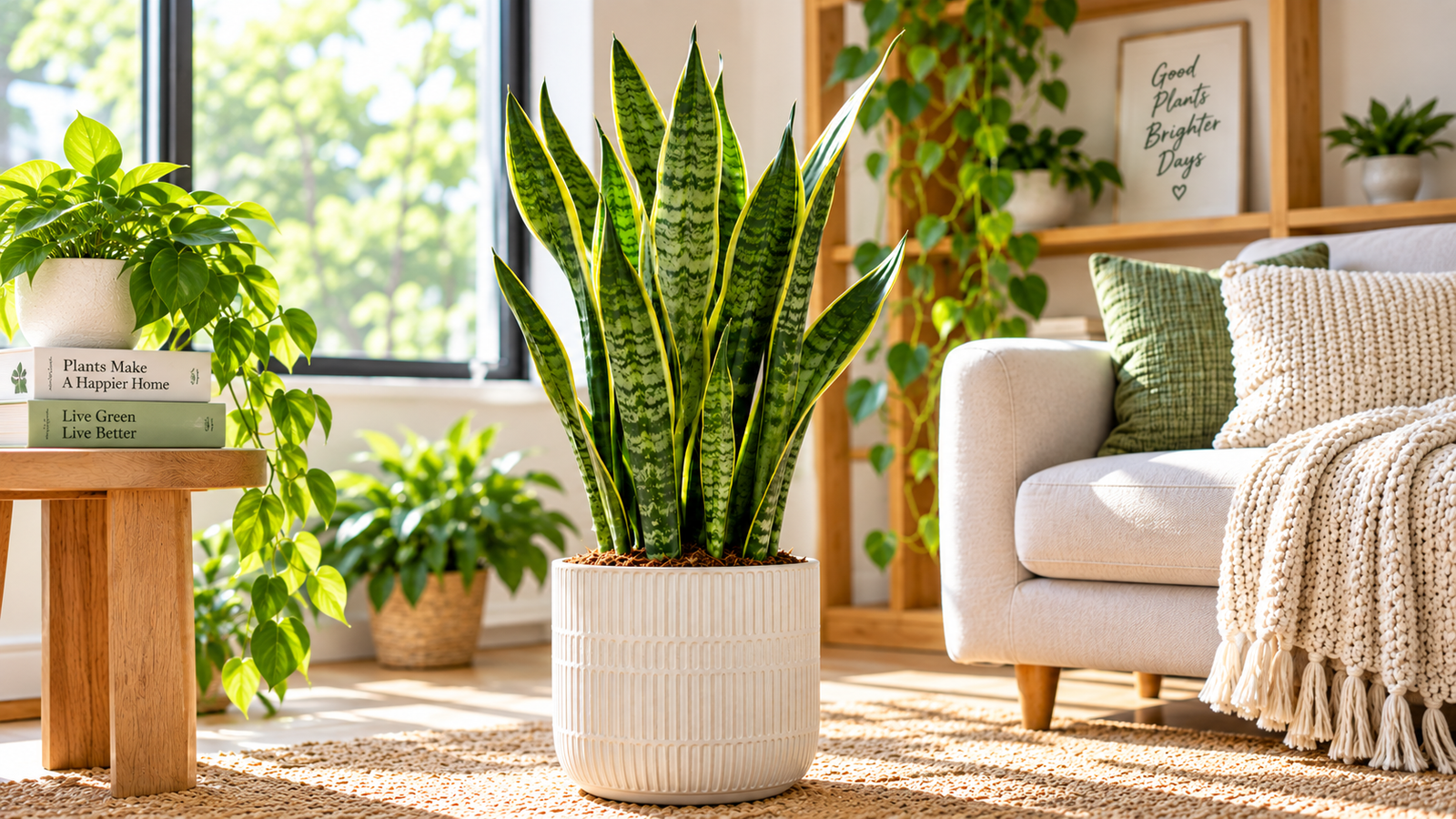

Snake plants are generally easy to care for, but they can still run into problems. Leaves may start drooping, turning yellow, curling, or becoming soft at the base. The tricky part is that some of these symptoms can have completely different causes. This guide covers the basic care a snake plant needs, followed by the most common problems and what to do about them.
This guide covers the basic care a snake plant needs, followed by the most common problems and what to do about them.
Quick Snake Plant Care Guide
| Factor | What a Snake Plant Needs |
|---|---|
| ☀️Light |
Low to bright indirect light; some direct sun is tolerated.
Snake plants survive in low light but grow faster and keep tighter, more upright leaves in bright indirect light. If the leaves start leaning or splaying open, they’re reaching for light — move the pot closer to a window. |
| 💧Water |
Water only when the soil has dried out completely — usually every 2–6 weeks.
Overwatering is the number-one way to kill this plant. Check that the soil is dry all the way to the bottom of the pot before watering again. In winter that can mean a month or more between waterings. |
| 🪴Soil |
Fast-draining cactus or succulent mix.
A standard cactus/succulent mix works out of the bag. If you only have regular potting soil, cut it with a couple of handfuls of perlite or coarse sand so water drains instead of pooling around the roots. |
| 🏺Pot |
A pot with drainage holes; terracotta is a good option.
Terracotta wicks moisture out of the soil, which suits a plant that hates sitting wet. Whatever pot you pick, drainage holes are non-negotiable — no holes means trapped water and root rot. |
| 🌡️Temperature |
Around 60–85°F (15–29°C); protect from temperatures below about 50°F.
Keep it away from cold drafts and single-pane windows in winter. A sudden chill below ~50°F can leave the leaves soft, mushy, and permanently damaged. |
| 💨Humidity |
Normal household humidity is fine.
No misting or humidifier needed. Snake plants are happiest in the dry indoor air most homes already have. |
| 🌱Fertilizer |
Optional; use a diluted balanced fertilizer once or twice during spring and summer.
Feeding is a bonus, not a requirement. If you do it, use a half-strength balanced feed only in spring and summer — skip it in winter when growth naturally stalls. |
| 🏷️Botanical name |
Dracaena trifasciata (formerly Sansevieria trifasciata).
It was reclassified from Sansevieria to Dracaena in 2017, so you’ll still see both names on plant tags and in older care guides — they’re the same plant. |
| 🐾Pet safety |
Mildly toxic to cats and dogs if chewed.
The leaves contain saponins that can cause drooling, vomiting, or diarrhea if a pet chews them. Keep it out of reach of curious cats and dogs, or pick a pet-safe plant if that’s a concern in your home. |
Tip: click any “Care tip” to expand practical guidance for that factor.
Snake Plant Care, Kept Simple
The main thing to remember about a snake plant is that its thick leaves store water. It can handle dry conditions much better than constantly wet soil.
Watering
Water when the potting mix has dried out completely, including deeper in the pot. Depending on the light, temperature, pot, and season, this may be every two to six weeks. In a cool, dim room during winter, it can take even longer.
Don’t water simply because a certain number of days have passed.
When it’s time to water, soak the soil thoroughly until water comes out of the drainage holes. Empty any water sitting in the saucer afterward.
A wooden skewer pushed down toward the bottom of the pot can help you check whether the soil is still damp. A moisture meter can also be useful.
If you’re unsure whether the plant needs water, waiting a little longer is usually safer than watering wet soil again.
Light
Snake plants are adaptable. They can survive in relatively low light, but they won’t grow quickly there.
For better growth, place yours somewhere with bright indirect light. An east- or west-facing window can work well.
Variegated varieties may also show stronger coloring in brighter conditions. In very low light, varieties such as ‘Laurentii’ can gradually lose some of their yellow coloring.
Some direct sunlight is tolerated, but strong sunlight through a hot window can damage or fade the leaves.
Soil and Pot
Good drainage is important.
A cactus or succulent potting mix is a simple choice. If you’re using regular potting soil, mixing in perlite can improve drainage.
Always use a pot with drainage holes. A container without drainage makes it much harder for excess water to escape and increases the risk of root problems.
Terracotta pots can be useful because they allow the soil to dry more quickly.
Temperature, Humidity, and Fertilizer
Normal indoor temperatures are usually suitable. Protect the plant from cold conditions, particularly temperatures below about 50°F (10°C), and avoid placing it against a very cold window.
You don’t need to create high humidity for a snake plant. Normal household air is generally fine.
Fertilizer is optional. If you use it, a diluted balanced fertilizer once or twice during spring and summer is enough. Frequent feeding isn’t necessary for a slow-growing plant.
Common Snake Plant Problems
When a snake plant starts looking unhealthy, the symptom itself doesn’t always tell you the cause. Check the soil, roots, light, and condition of the leaves before changing your care routine.
Why Is My Snake Plant Drooping or Falling Over?
Drooping or splayed leaves usually come down to one of three things: watering problems, insufficient light, or a pot that isn’t providing enough support.
1. Overwatering
If the leaves are becoming soft at the base and the soil is staying wet, overwatering may have damaged the roots.
Check the base of the leaves and the soil. Soft tissue combined with consistently damp soil is a warning sign for root rot.
2. Too Little Light
Leaves that remain firm but become weak, stretched, and increasingly spread out may not be getting enough light.
A plant kept in a very dark location can produce weaker growth that leans toward whatever light is available.
Moving it to a brighter spot is more useful than giving it extra water.
3. Pot Problems
Sometimes the plant is perfectly healthy but simply unstable.
A very large pot can hold excess moisture, while a tall, top-heavy plant may need a heavier container for support.
If the leaves are firm and healthy but the entire plant keeps tipping over, the problem may be mechanical rather than a health issue.
Soft or Mushy Leaves at the Base
Soft, mushy leaves near the base are a more serious warning sign. Yellowing leaves combined with a soft base can indicate root or crown rot, particularly when the soil remains wet for a long time.
Remove the plant from its pot and inspect the roots.
Healthy roots should be firm. Rotten roots are usually brown or black, soft, and may fall apart when handled.
Remove the rotten sections with clean scissors. Keep the firm, healthy tissue and repot the plant in fresh, dry, fast-draining soil.
Use a pot with drainage holes and avoid moving the plant into a much larger container. If the previous pot was oversized, going down a size may help the soil dry more appropriately.
After repotting, give the damaged roots some time to recover before watering again.
If the rot has reached most of the crown, saving the original plant may not be possible. Healthy remaining leaves can sometimes be used for propagation.
Why Is My Snake Plant Turning Yellow?
Yellow leaves don’t always mean something is wrong.
If a single older leaf near the outside of the plant gradually turns yellow while the rest of the plant looks healthy, it may simply be an old leaf reaching the end of its life.
However, several yellow leaves accompanied by soft bases and wet soil point more strongly toward overwatering. Harsh direct sunlight can also affect leaf color. If the plant is sitting in strong sun and the leaves are becoming faded or yellow around the margins, try moving it slightly farther from the window.
Brown Tips or Brown Spots
Crispy brown tips can have several causes, including inconsistent watering, mineral buildup, excess fertilizer, or exposure to cold drafts.
Instead of giving the plant small amounts of water frequently, let the soil dry out and then water thoroughly.
If you have hard tap water, occasional thorough watering that allows plenty of water to drain through the pot can help reduce accumulated minerals in the soil.
Keep the plant away from heating and air-conditioning vents as well as cold drafts.
Brown tissue won’t turn green again. You can leave it alone or trim the damaged section for appearance.
Why Are My Snake Plant Leaves Curling?
Curling or inward-folding leaves often mean the plant is too dry.
Check the soil before doing anything else. If it is completely dry and the pot feels unusually light, water the plant thoroughly and allow the excess water to drain.
The leaves may take several days to firm up again.
If the soil isn’t dry but the leaves are still curling, inspect the plant for pests, particularly along the undersides of leaves and where the leaves meet.
Wrinkled, Thin, or Creased Leaves
Wrinkled or thin leaves are another common sign of underwatering.
Check the soil first. If it is completely dry, give the plant a thorough watering.
A badly rootbound plant can also have trouble holding enough moisture. If roots are circling the inside of the pot, coming out of the drainage holes, or filling most of the container, it may be time to repot.
Snake plants generally don’t need frequent repotting, so don’t move them into a larger pot simply because growth seems slow.
Why Is My Snake Plant Not Growing?
Slow growth is normal for snake plants, particularly in low light and during winter.
If the plant is healthy but hasn’t produced new leaves for several months, check its light before changing anything else. Moving it to a brighter location can encourage more active growth during the growing season.
Being severely rootbound can also restrict growth.
Fertilizer may help during the growing season, but it won’t turn a naturally slow-growing snake plant into a fast-growing one.
Splitting, Cracking, or Scarred Leaves
Splits, dents, and scars are usually caused by physical damage rather than a disease.
A leaf may have been knocked, bent, damaged by a pet, exposed to cold, or injured some time ago.
The damaged section won’t repair itself. Minor damage can simply be left alone. If a leaf is badly damaged, cut it at soil level with clean scissors and allow new growth to replace it.
Snake Plant Pests
Snake plants don’t usually have serious pest problems, but mealybugs and spider mites can appear.
Mealybugs look like small white, cottony clusters, often hiding between leaves.
Spider mites can cause fine webbing and small areas of pale stippling on the leaves.
Start by wiping the leaves with a damp cloth. For an established infestation, insecticidal soap can be useful. Keep an affected plant away from other houseplants until the infestation has been dealt with.
Checking the leaves regularly makes pests much easier to catch early.
The Bottom Line
Snake plants don’t need complicated care. Give them a well-draining pot, enough light to keep them growing, and—most importantly—let the soil dry out before watering again.
If something starts to look wrong, check the soil and the base of the leaves before changing your routine. Soft and yellow usually calls for less water, while dry, wrinkled, or curled leaves usually point in the other direction. Once you learn that difference, most snake plant problems become much easier to diagnose.

[…] houseplant that does well indoors. If you’re also growing a snake plant, see our Snake Plant Care and Problems guide for help with its light, watering, and common […]